Owner: Thomas Brown & Sons.
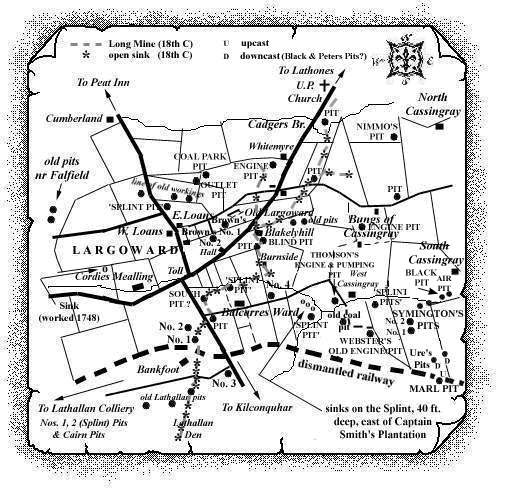
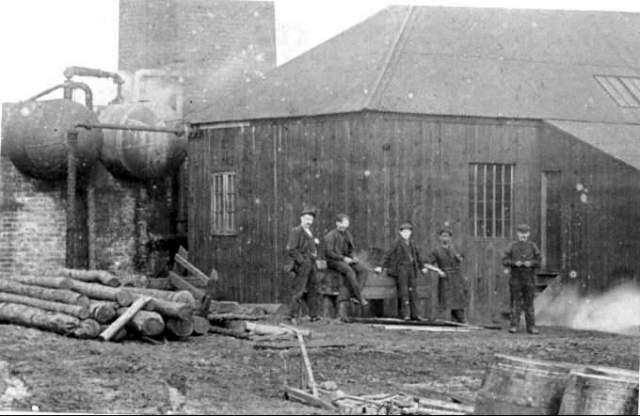
Browns No. 1 Pit was sunk in the first year of the 20th century, in the centre of the village of Largoward, just west of the church.
 |
The good news was heralded in one local paper of the day:
"The East of Fife Record"
23 November, 1900
"Messrs. Brown are at present opening up a pit in the centre of the village, which is expected to employ a large number of men .. There is also every probability that the coal on the Lathockar estate will be opened up during the present winter."
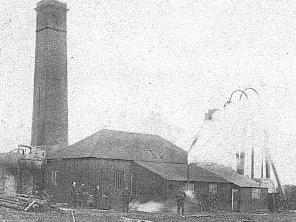
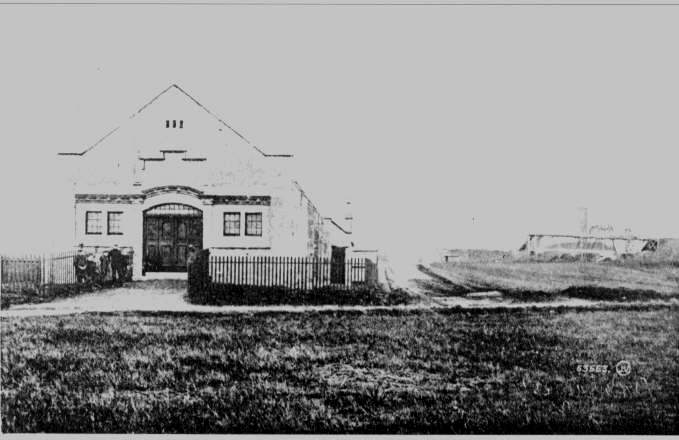
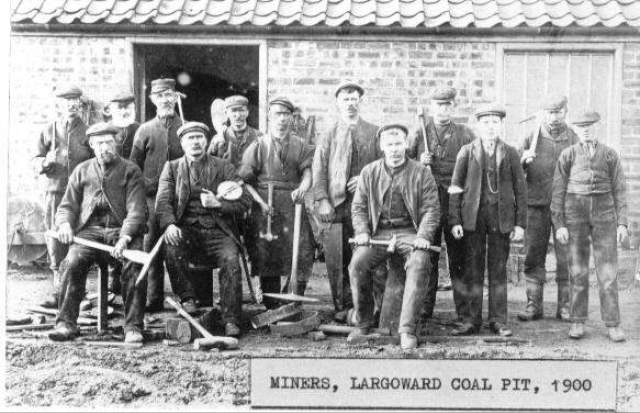
Courtesy of Ian Terris, Glenrothes, photographs of this pit and of some of the miners who wrought there are displayed below:
|
 |
 |
 |
Little is known about this pit other than it encountered the Splint Coal seam at a depth of 319 ft. 4 in. down the shaft. An old plan indicates an underground road through stoops of old workings linking to the No. 2 Pit which was sunk only a few hundred yards to the south-west of the No. 1 shaft.
The No. 1 pit was worked for just over ten years and closed in April, 1911, when water flooded the workings of the pit. One local paper reported the seriousness of this incident:
"The East of Fife Record"
6 April, 1911
"As was stated in last week's issue, a temporary stoppage of work was caused at Messrs. Browns' owing to an increase in the amount of water. It was then stated that when the water then rose to the foot of the shaft, the main pump would be sufficient to cope with the inflow, and that if the quality of the water was not injurious to the pumping plant, work would be resumed at once. By Wednesday morning, the water had reached the foot of the shaft and, unfortunately, the worst fears have been realised. The water is of a quality highly injurious to the plant, which has all been brought to the surface. The main pump was closed down on Wednesday morning, and the pit will be closed down altogether. This is a serious matter for the village, and it is the general hope that the development of the new pit will be pushed on as rapidly as possible in order that the men now employed may again find work."
... and in a report from 1977 ...
In the Largoward area itself, the Largoward Black Coal has
been proved by many boreholes and was mined from several
collieries including Largoward, Lathallan, Largobeath and
Falfield, but the workings were nowhere extensive because
there was no great demand for this seam as long as supplies
of the Largoward Splint Coal were available. In this area
also it is usually split into as many as four leaves, and the
name tends to be applied only to the highest and thickest
leaf, which is usually between 3 ft. 3 in. and 3 ft. 11 in.
thick.
One of the other leaves was worked to a very small extent as
the Scarrat Loft Coal from Largoward No. 1 Pit, where
it is 2 ft. 11 in thick.
| Plan of Abandoned Seams for Largoward No. 1 Pit | Pits or Mines designated in Plan |
|---|---|
| COAL; Black; Splint; Scarrat Loft; Thick (1911) | Old No. 3; Nos. 1, 2; Coal Park |
[Note: The Scarrat Loft or Lower Coal lay below the Black Coal and may have been 'foul' in comparison with the latter seam.]
Clean up the spoils
Ian Terriss, Glenrothes, recalls that when the bing,
behind the church and not far from the Largoward village hall
and created from the working of Brown's No. 1 Pit, was
carted away for road filling in the 1970s, lorries came in
the top road (Kings highway now; Cadgers Road or North road
before) and went out the bottom road (St Andrews road) by the
village hall, the owners of the field collected half a crown
per ton for it!
[Half a crown was 2s.6d. in "old money" or 12.5p in
today's currency!]
| See Largoward Colliery entry - East Fife Index. |
|---|
